Buy motivationmagazin.eu ?
We are moving the project
motivationmagazin.eu .
Are you interested in purchasing the domain
motivationmagazin.eu ?
domain@kv-gmbh.de · 0541-91531010
Buy motivationmagazin.eu ?
What are the differences between covalent bonds, metallic bonds, and ionic bonds?
Covalent bonds are formed when two atoms share electrons, resulting in a strong bond between the atoms. Metallic bonds occur between metal atoms, where the electrons are delocalized and free to move throughout the structure, creating a strong bond. Ionic bonds are formed between a metal and a nonmetal, where one atom transfers electrons to the other, resulting in the formation of positively and negatively charged ions that are attracted to each other. Overall, covalent bonds involve electron sharing, metallic bonds involve electron delocalization, and ionic bonds involve electron transfer. **
Do CO bonds form with other CO bonds?
No, CO bonds do not typically form with other CO bonds. Carbon monoxide (CO) is a stable molecule with a triple bond between the carbon and oxygen atoms. This triple bond is strong and does not readily form additional bonds with other CO molecules. Instead, CO molecules tend to interact with other types of molecules through various types of chemical reactions. **

Similar search terms for Bonds
Top-Angebote
Products related to Bonds:
-
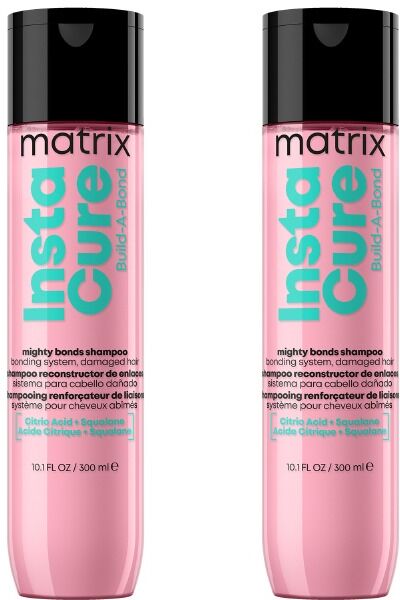
Matrix Instacure Build-A-Bond Mighty Bonds Shampoo 300ml & Instacure BStock up and save with this Matrix Instacure Build-A-Bond Mighty Bonds Shampoo 300ml & Instacure Build-A-Bond Mighty Care Conditioner 300ml Duo! Healthy hair starts from within, and this Matrix Instacure Build-A-Bond Mighty Bonds Shampoo and Conditioner gets straight to work to repair your hair. The luxuriously textured shampoo forms a rich lather and gets to work immediately on mega damaged hair and the luxuriously creamy conditioner gets straight to work with key ingredient Squalane, which works on the hairs surface to soften and smooth each strand for a silky finish! Both are infused with citric acid, this conditioner penetrates deep into the hair fiber to strengthen and reinforce damaged hair strands from within. Ingredients: Shampoo: aqua / water / eau, decyl glucoside, sodium cocoyl isethionate, cocamidopropyl betaine, citric acid, sodium hydroxide, panthenol, parfum / fragrance, glycerin, dimethicone, peg-150 distearate, ppg-5-ceteth-20, sodium benzoate, sodium chloride, peg-55 propylene glycol oleate, propylene glycol, carbomer, limonene, coco-caprylate/caprate, polyquaternium-67, salicylic acid, amodimethicone, sodium phytate, glycol distearate, squalane, coco-betaine, linalool, acrylates/beheneth-25 methacrylate copolymer, citronellol, trideceth-6, benzyl alcohol, alcohol, cetrimonium chloride, ci 17200 / red 33 Conditioner: aqua / water / eau, cetearyl alcohol, propylene glycol, behentrimonium chloride, glycerin, cetyl esters, dimethicone, peg/ppg-4/12 dimethicone, amodimethicone, parfum / fragrance, isopropyl alcohol, dicetyldimonium chloride, citric acid, phenoxyethanol, limonene, isopropyl myristate, hydroxypropyl guar, squalane, linalool, trideceth-10, coco-betaine, citronellol, cetrimonium chloride, peg-100 stearate, steareth-6, sodium chloride, benzyl alcohol, trideceth-3, acetic acid, trisodium hedta, pentaerythrityl tetra-di-t-butyl hydroxyhydrocinnamate, ci 17200 / red 3324,16 £*Shipping: 0,00 £Secure redirect to the provider
-
Inspired Finds Eternal Bonds Personalized Acrylic Photo Frame & Custom Couple Plaque Gift warm LightCapture Your Timeless Connection. Turn your most meaningful moments into a lasting keepsake with this elegant personalized acrylic photo frame. Designed specifically for couples who value memories that matter, this sleek, transparent display piece...110,99 $*Shipping: 0,00 $Secure redirect to the provider
-
Uplifted Finds The Control Circle Archetype Social Worker Empowerment Canvas Executive Office & Wellness Sanctuary Decor 13 X 18 Cm No Frame"Inaugurate a grounding ""MindfulnessSanctuary"" energy in your environment with our ""Control Circle"" Archetype Canvas. This premium Social Worker and Mental Health professional print is the ultimate designer solution for creating a ""ClinicalModern"" or..."41,97 $*Shipping: 0,00 $Secure redirect to the provider
-
Rupa Publications Success Through a Positive Mental Attitude by Napoleon Hill & W. Clement Stone - Paperback - Self-Help Classic for Personal Growth & SuccessSuccess Through a Positive Mental Attitude is a timeless self-help classic co-written by Napoleon Hill, author of Think and Grow Rich, and self-made insurance millionaire W. Clement Stone. First published decades ago, the book distills the authors' famous 'PMA' philosophy into practical, actionable steps. This brand-new paperback edition, published by Rupa Publications, brings one of the most influential personal-development books of the century to readers seeking motivation and direction. Napoleon Hill and W. Clement Stone teamed up to create one of the most enduring partnerships in the personal development world, and the result was a book that has helped millions of readers unlock their hidden potential. At its heart is the idea of the 'invisible talisman' every person carries: on one side, the letters PMA for Positive Mental Attitude; on the other, the potential for personal growth and success.2,99 £*Shipping: 2,99 £Secure redirect to the provider




-
Why are intermolecular bonds weaker than electron pair bonds?
Intermolecular bonds are weaker than electron pair bonds because they involve interactions between molecules rather than within a single molecule. In intermolecular bonds, the attractive forces between molecules are generally weaker than the covalent bonds that hold atoms together within a molecule. Additionally, intermolecular bonds are typically temporary and can be easily broken, whereas electron pair bonds are strong and stable. Overall, the weaker nature of intermolecular bonds allows molecules to move and interact with each other more freely. **
-
Why are intermolecular bonds generally weaker than covalent bonds?
Intermolecular bonds are generally weaker than covalent bonds because they involve interactions between molecules rather than within a single molecule. Covalent bonds involve the sharing of electrons between atoms, creating strong bonds within a molecule. In contrast, intermolecular bonds, such as hydrogen bonds or van der Waals forces, are weaker because they are based on temporary interactions between molecules, which can be easily broken. Additionally, intermolecular bonds are influenced by factors such as distance and orientation, further contributing to their weaker nature compared to covalent bonds. **
-
Why are intermolecular bonds typically weaker than covalent bonds?
Intermolecular bonds are typically weaker than covalent bonds because they involve interactions between molecules rather than within a single molecule. In intermolecular bonds, the attractive forces between molecules, such as van der Waals forces or hydrogen bonding, are weaker than the strong sharing of electrons in covalent bonds. Additionally, intermolecular bonds are more easily broken or disrupted by changes in temperature or pressure, leading to lower bond energies compared to covalent bonds. **
-
Why are intermolecular bonds generally weaker than electron pair bonds?
Intermolecular bonds are generally weaker than electron pair bonds because they involve interactions between molecules, which are larger and less localized than the interactions between atoms in a covalent bond. In intermolecular bonds, the attractive forces are typically weaker due to the larger distance between molecules and the lack of direct sharing of electrons. In contrast, electron pair bonds involve the sharing of electrons between atoms, leading to stronger and more localized bonding interactions. **

Why are intermolecular bonds typically weaker than electron pair bonds?
Intermolecular bonds are typically weaker than electron pair bonds because they involve interactions between molecules rather than within a single molecule. In intermolecular bonds, the attractive forces between molecules are generally weaker than the covalent bonds that hold atoms together within a molecule. Additionally, intermolecular bonds are usually based on weaker forces such as van der Waals forces, hydrogen bonding, or dipole-dipole interactions, which are not as strong as the sharing or transfer of electrons in covalent or ionic bonds. **
Why are polar bonds lower in energy than nonpolar bonds?
Polar bonds are lower in energy than nonpolar bonds because they involve the unequal sharing of electrons between two atoms with different electronegativities. This unequal sharing creates a dipole moment, which results in an attractive force between the partially positive and partially negative ends of the molecule. This electrostatic attraction lowers the overall energy of the molecule compared to nonpolar bonds, where electrons are shared equally. As a result, polar bonds are typically stronger and more stable than nonpolar bonds. **
Top-Angebote
Products related to Bonds:
-
milk_shake Everlasting Bonds Leave In Treatment 100mLA hair-care product. It a lightweight leave-in treatment designed to enhance your hair's softness, shine, and manageability without adding weight. This innovative formula provides heat protection up to 230°C, making it ideal for styling while addressing hair damage and promoting a healthier appearance.26,33 £*Shipping: 5,34 £Secure redirect to the provider
-
Matrix Instacure Build-A-Bond Mighty Bonds Shampoo 300ml DoubleStock up and save on professional results at home with this double Matrix Instacure Build-A-Bond Mighty Bonds Shampoo! (Includes 2 x 300ml Shampoo) Healthy hair starts from within, and this Matrix Instacure Build-A-Bond Mighty Bonds Shampoo gets straight to work This luxuriously textured shampoo forms a rich lather and gets to work immediately on mega damaged hair. Key ingredients include Citric acid, which penetrates deep into the hair fiber to strengthen and repair your hair from within. It's also infused with Squalane, which works on the hair's surface to soften and smooth every strand! Ingredients: AQUA / WATER / EAU, DECYL GLUCOSIDE, SODIUM COCOYL ISETHIONATE, COCAMIDOPROPYL BETAINE, CITRIC ACID, SODIUM HYDROXIDE, PANTHENOL, PARFUM / FRAGRANCE, GLYCERIN, DIMETHICONE, PEG-150 DISTEARATE, PPG-5-CETETH-20, SODIUM BENZOATE, SODIUM CHLORIDE, PEG-55 PROPYLENE GLYCOL OLEATE, PROPYLENE GLYCOL, CARBOMER, LIMONENE, COCO-CAPRYLATE/CAPRATE, POLYQUATERNIUM-67, SALICYLIC ACID, AMODIMETHICONE, SODIUM PHYTATE, GLYCOL DISTEARATE, SQUALANE, COCO-BETAINE, LINALOOL, ACRYLATES/BEHENETH-25 METHACRYLATE COPOLYMER, CITRONELLOL, TRIDECETH-6, BENZYL ALCOHOL, ALCOHOL, CETRIMONIUM CHLORIDE, CI 17200 / RED 3324,16 £*Shipping: 0,00 £Secure redirect to the provider
-
Matrix Instacure Build-A-Bond Mighty Bonds Shampoo 300ml & Instacure BStock up and save with this Matrix Instacure Build-A-Bond Mighty Bonds Shampoo 300ml & Instacure Build-A-Bond Mighty Care Conditioner 300ml Duo! Healthy hair starts from within, and this Matrix Instacure Build-A-Bond Mighty Bonds Shampoo and Conditioner gets straight to work to repair your hair. The luxuriously textured shampoo forms a rich lather and gets to work immediately on mega damaged hair and the luxuriously creamy conditioner gets straight to work with key ingredient Squalane, which works on the hairs surface to soften and smooth each strand for a silky finish! Both are infused with citric acid, this conditioner penetrates deep into the hair fiber to strengthen and reinforce damaged hair strands from within. Ingredients: Shampoo: aqua / water / eau, decyl glucoside, sodium cocoyl isethionate, cocamidopropyl betaine, citric acid, sodium hydroxide, panthenol, parfum / fragrance, glycerin, dimethicone, peg-150 distearate, ppg-5-ceteth-20, sodium benzoate, sodium chloride, peg-55 propylene glycol oleate, propylene glycol, carbomer, limonene, coco-caprylate/caprate, polyquaternium-67, salicylic acid, amodimethicone, sodium phytate, glycol distearate, squalane, coco-betaine, linalool, acrylates/beheneth-25 methacrylate copolymer, citronellol, trideceth-6, benzyl alcohol, alcohol, cetrimonium chloride, ci 17200 / red 33 Conditioner: aqua / water / eau, cetearyl alcohol, propylene glycol, behentrimonium chloride, glycerin, cetyl esters, dimethicone, peg/ppg-4/12 dimethicone, amodimethicone, parfum / fragrance, isopropyl alcohol, dicetyldimonium chloride, citric acid, phenoxyethanol, limonene, isopropyl myristate, hydroxypropyl guar, squalane, linalool, trideceth-10, coco-betaine, citronellol, cetrimonium chloride, peg-100 stearate, steareth-6, sodium chloride, benzyl alcohol, trideceth-3, acetic acid, trisodium hedta, pentaerythrityl tetra-di-t-butyl hydroxyhydrocinnamate, ci 17200 / red 3324,16 £*Shipping: 0,00 £Secure redirect to the provider
-
Inspired Finds Eternal Bonds Personalized Acrylic Photo Frame & Custom Couple Plaque Gift warm LightCapture Your Timeless Connection. Turn your most meaningful moments into a lasting keepsake with this elegant personalized acrylic photo frame. Designed specifically for couples who value memories that matter, this sleek, transparent display piece...110,99 $*Shipping: 0,00 $Secure redirect to the provider
-
What are the differences between covalent bonds, metallic bonds, and ionic bonds?
Covalent bonds are formed when two atoms share electrons, resulting in a strong bond between the atoms. Metallic bonds occur between metal atoms, where the electrons are delocalized and free to move throughout the structure, creating a strong bond. Ionic bonds are formed between a metal and a nonmetal, where one atom transfers electrons to the other, resulting in the formation of positively and negatively charged ions that are attracted to each other. Overall, covalent bonds involve electron sharing, metallic bonds involve electron delocalization, and ionic bonds involve electron transfer. **
-
Do CO bonds form with other CO bonds?
No, CO bonds do not typically form with other CO bonds. Carbon monoxide (CO) is a stable molecule with a triple bond between the carbon and oxygen atoms. This triple bond is strong and does not readily form additional bonds with other CO molecules. Instead, CO molecules tend to interact with other types of molecules through various types of chemical reactions. **
-
Why are intermolecular bonds weaker than electron pair bonds?
Intermolecular bonds are weaker than electron pair bonds because they involve interactions between molecules rather than within a single molecule. In intermolecular bonds, the attractive forces between molecules are generally weaker than the covalent bonds that hold atoms together within a molecule. Additionally, intermolecular bonds are typically temporary and can be easily broken, whereas electron pair bonds are strong and stable. Overall, the weaker nature of intermolecular bonds allows molecules to move and interact with each other more freely. **
-
Why are intermolecular bonds generally weaker than covalent bonds?
Intermolecular bonds are generally weaker than covalent bonds because they involve interactions between molecules rather than within a single molecule. Covalent bonds involve the sharing of electrons between atoms, creating strong bonds within a molecule. In contrast, intermolecular bonds, such as hydrogen bonds or van der Waals forces, are weaker because they are based on temporary interactions between molecules, which can be easily broken. Additionally, intermolecular bonds are influenced by factors such as distance and orientation, further contributing to their weaker nature compared to covalent bonds. **
Similar search terms for Bonds
-
Uplifted Finds The Control Circle Archetype Social Worker Empowerment Canvas Executive Office & Wellness Sanctuary Decor 13 X 18 Cm No Frame"Inaugurate a grounding ""MindfulnessSanctuary"" energy in your environment with our ""Control Circle"" Archetype Canvas. This premium Social Worker and Mental Health professional print is the ultimate designer solution for creating a ""ClinicalModern"" or..."41,97 $*Shipping: 0,00 $Secure redirect to the provider
-
Rupa Publications Success Through a Positive Mental Attitude by Napoleon Hill & W. Clement Stone - Paperback - Self-Help Classic for Personal Growth & SuccessSuccess Through a Positive Mental Attitude is a timeless self-help classic co-written by Napoleon Hill, author of Think and Grow Rich, and self-made insurance millionaire W. Clement Stone. First published decades ago, the book distills the authors' famous 'PMA' philosophy into practical, actionable steps. This brand-new paperback edition, published by Rupa Publications, brings one of the most influential personal-development books of the century to readers seeking motivation and direction. Napoleon Hill and W. Clement Stone teamed up to create one of the most enduring partnerships in the personal development world, and the result was a book that has helped millions of readers unlock their hidden potential. At its heart is the idea of the 'invisible talisman' every person carries: on one side, the letters PMA for Positive Mental Attitude; on the other, the potential for personal growth and success.2,99 £*Shipping: 2,99 £Secure redirect to the provider
-
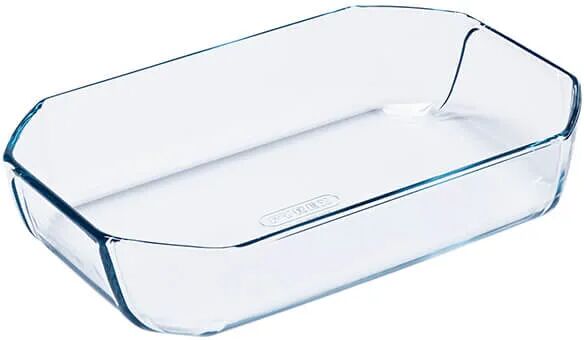
Pyrex Inspiration 35 x 22cm Rectangular RoasterThe Pyrex Inspiration Rectangular Roaster is made from high borosilicate glass that is thermal shock resistant up to 220°C. The geometric shape of the eye catching design features integrated handles ideal for serving oven baked meals and has a 10 year guarantee. This glass Roaster can store food in the fridge and freezer for easy food preparation. The Pyrex Inspiration Rectangular Roaster is 35 x 22cm.16,19 £*Shipping: 3,50 £Secure redirect to the provider
-
Juicy Couture Wellness MatsMake time in the kitchen more comfortable with the Juicy Couture Wellness Mat. Cushioned anti-fatigue support helps ease pressure during meal prep and cleanup, while the skid-resistant backing helps the mat stay in place.28,99 $*Shipping: 0,00 $Secure redirect to the provider
-
Why are intermolecular bonds typically weaker than covalent bonds?
Intermolecular bonds are typically weaker than covalent bonds because they involve interactions between molecules rather than within a single molecule. In intermolecular bonds, the attractive forces between molecules, such as van der Waals forces or hydrogen bonding, are weaker than the strong sharing of electrons in covalent bonds. Additionally, intermolecular bonds are more easily broken or disrupted by changes in temperature or pressure, leading to lower bond energies compared to covalent bonds. **
-
Why are intermolecular bonds generally weaker than electron pair bonds?
Intermolecular bonds are generally weaker than electron pair bonds because they involve interactions between molecules, which are larger and less localized than the interactions between atoms in a covalent bond. In intermolecular bonds, the attractive forces are typically weaker due to the larger distance between molecules and the lack of direct sharing of electrons. In contrast, electron pair bonds involve the sharing of electrons between atoms, leading to stronger and more localized bonding interactions. **
-
Why are intermolecular bonds typically weaker than electron pair bonds?
Intermolecular bonds are typically weaker than electron pair bonds because they involve interactions between molecules rather than within a single molecule. In intermolecular bonds, the attractive forces between molecules are generally weaker than the covalent bonds that hold atoms together within a molecule. Additionally, intermolecular bonds are usually based on weaker forces such as van der Waals forces, hydrogen bonding, or dipole-dipole interactions, which are not as strong as the sharing or transfer of electrons in covalent or ionic bonds. **
-
Why are polar bonds lower in energy than nonpolar bonds?
Polar bonds are lower in energy than nonpolar bonds because they involve the unequal sharing of electrons between two atoms with different electronegativities. This unequal sharing creates a dipole moment, which results in an attractive force between the partially positive and partially negative ends of the molecule. This electrostatic attraction lowers the overall energy of the molecule compared to nonpolar bonds, where electrons are shared equally. As a result, polar bonds are typically stronger and more stable than nonpolar bonds. **
* All prices are inclusive of VAT and, if applicable, plus shipping costs. The offer information is based on the details provided by the respective shop and is updated through automated processes. Real-time updates do not occur, so deviations can occur in individual cases. ** Note: Parts of this content were created by AI.